
Si usted necesita la versión en español clic AQUI
The Ecuadorian Amazon is one of the most biodiverse areas on the planet, it has a vast amount of animal and plant species, it is part of the amazon basin that generates between 16% and 20% of the planet’s freshwater and contains 25% of terrestrial biodiversity. The approximate area of 120,000 km² that corresponds to 43% of the country’s territory,it includes six provinces (territorial division of Ecuador), bordering Peru and Colombia.Its geography ranges from small hills in the foothills of the Andes to the plain, which is the largest area, the climate is hot-humid where the temperature varies between 15 and 40 °C (59 and 104 ℉) and the humidity can reach up to 80 to 100%.
Due to its great extension, it has some reserves and national parks. In this occasion, we visited the Yasuní Biosphere Reserve located in the province of Napo (north of the Amazon) the dominant ecosystem is the Humid Tropical Rain Forest that is part of the upper Amazon basin being 99.73% of its extension represented by original or primary natural vegetation.
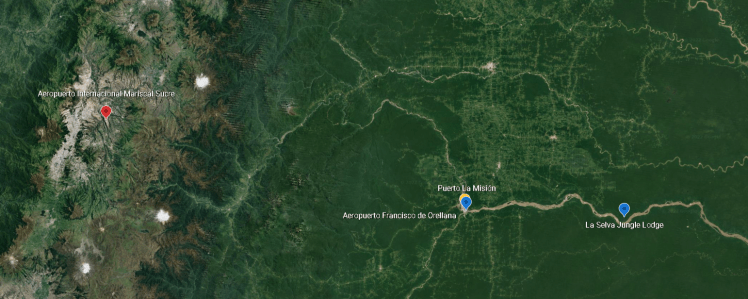
In 2021 we set ourselves the goal of learning more about our country and it is so that in October 2021 we began to plan the end of the year trip, we decided to go to Yasunísince it is one of the most biodiverse places in the world and we wanted to show it and enjoy it in the first person,so we looked for a lodge which service was for small groups due to the current contingency and also adapted to the available vacation days.(if you want to know the review of the place we invite you to our trip advisor account LINK TO THE REVIEW IN TRIP ADVISOR)
It was thus that between the Christmas and New Year’s festivities we began the trip. From the city where we live now, Quito, we took a 30 minute flight to El Coca,where the guides took us to the transport that would take the group to the dock where we traveled on a boat for about two hours down the Coca River to the entrance of the lodge. After that, we took a small rowing boat to move along a stream that took us to the Garzacocha lagoon where the lodge is located. The view is spectacular, from there we began to enjoy the magnificence of the exuberant vegetation and the wild animals that welcomed us.
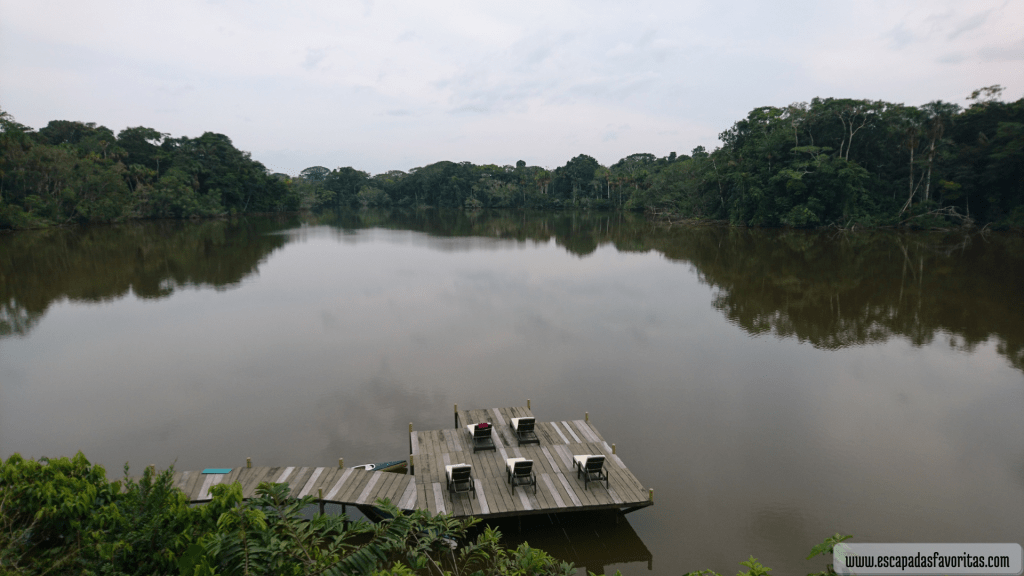
In the afternoon, together with our naturalist guide Luis and the local guide Henry, we explored the lagoon by rowing boat where we realized that a large paiche(Arapaima gigas) was close, due to the turbulence of the water it is not easy to identify the fish but its movements do not go unnoticed; on the edges of the lagoon we saw some hoatzins or mountain turkeys (Opisthocomus hoazin) that rested on one of the species of coussapoa or “matapalo” existing in the place. A great experience was clearly seeing how squirrel monkeys (Saimiri Sciureus) and capuchin monkeys (Cebus Macrocephalus) fed, we actually loved it since they are numerous and thanks to being a small group it was possible to enjoy observing them.
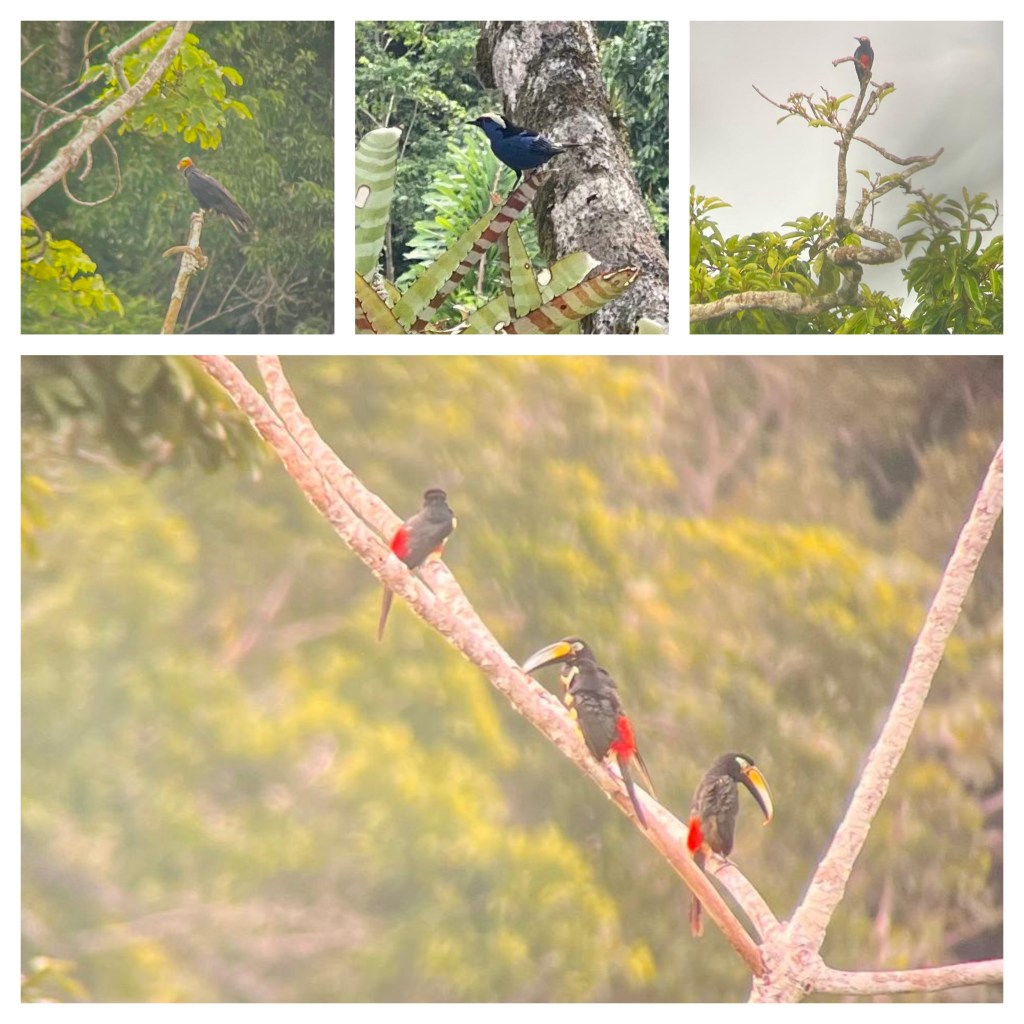
The next day very early in the morning at 6 AM,we went to the observation tower located 15 minutes from the lodge, we climbed 35 meters (115 feet), from there we can see the canopy or tops of the trees as well as the imposing ceibas (Ceiba pentandra). In the place we began to look for species, it did not take long for a group of red howler monkeys to appear before our eyes (Alouatta seniculus),there were about six to ten individuals and they rested a few meters from us,thanks to the telescope we were able to enjoy them throughout our stay there.The knowledge of the local and naturalist guide s allowed us to identify some species such as:curiquingue (Daptrius ater), bidentate hawk (Harpagus bidentatus), euphonia (Euphonia xanthogaster), dotted cotinga (Cotinga cayana), blue cotinga (Cotinga nattererii), banded arazari toucan (Pteroglossus pluricinctus) and greater yellow-headed vulture (Cathartes melambrotus).
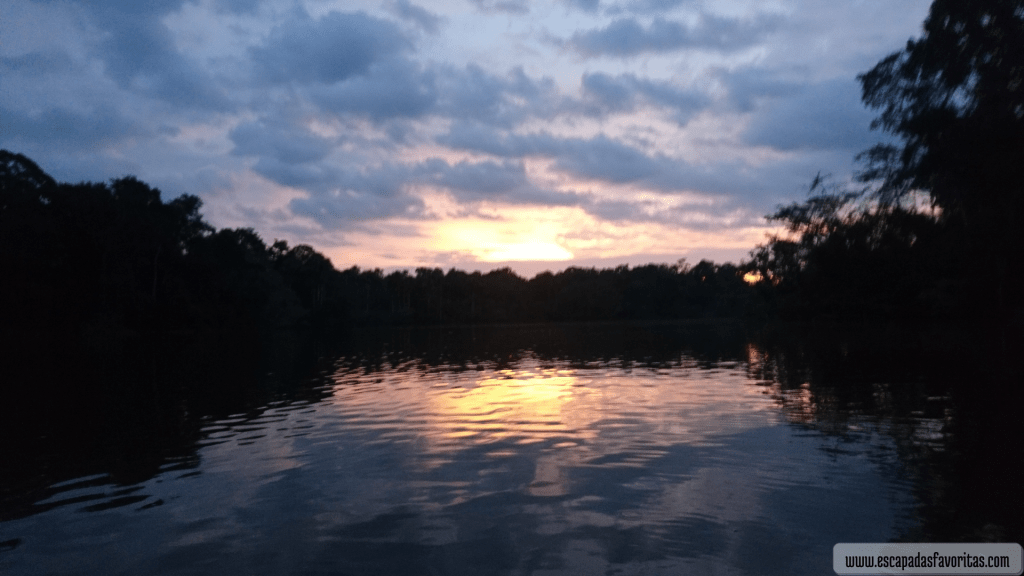
In the afternoon we hiked through the thick primary tropical rainforest to experience the sounds of nature. If you thought the place was silent, it really wasn’t. we realized that at every step the life of thousands of organisms and animals is noted. We finished the walk and took the rowboat to watch the sunset from the lagoon.
The next morning we left for the recently formed parrot salting to get to the place we take a motorized canoe after 20 minutes down the Coca river, , we were able to observe one of the most beautiful events of nature on one side of the river since thousands of birds such as parrots and parakeets (family of psittacines) approach every day to consume certain minerals that allow them to improve the digestion of fruits and seeds of the forest that are their main food this is a habit of the birds that for about two to three hours nibble, peck, scratch and drink mud and water, supplementing their diet as an antacid and exquisite natural digestive.
After this great show we go to the Kichua community where Sandra welcomes us in her language and explains certain important aspects of the medicinal plants such as wild garlic (Mansoa alliacea), which is used to smoke houses and to make a “limpia”, a local ceremony performed by a wise man called Chaman. She also explains about the cultivation of cassava, a very important tuber for the community, it is a source of nutrients and they use it to make a typical drink called chicha; the process of making the drink is also explained and they gave us to try some of their common foods where it stands out a beetle larva called “chontacuro” that the locals consume roasted, with the belief of its nutritional and medicinal properties.

Upon returning to the lodge we were able to experience kayaking in the lagoon on our own and later in the afternoon go explore this ecosystem a little more by doing recreational and ecological fishing.Thanks to the guides we were able to observe catfish and a piranha, then we left them back in the lagoon. At night, we observe some constellations and stars, actually a different experience to enjoy the sounds of the forest under a sky free of light pollution from big cities.Thus we finished the trip for the next day to take the return boat that would take about 3 hours and then the flight back to Quito.

At the end of the trip we are left with many experiences, photos and memories lived and we know. We must return because, as in any trip, there are always pending things to do and attractions to discover.We arrived home to say goodbye to the year 2021 and welcome 2022, an important year since it is the beginning of this project of ours.
Soon we will write about one of our trips already made to continue thanking you for the pleasure of sharing the taste for our «Favorite Getaways»
Si usted necesita la versión en español clic AQUI


Un comentario en “Trip to the Ecuadorian Amazon – Yasuni”