
Trip to the Ecuadorian Amazon – Yasuni

Si usted necesita la versión en español clic AQUI

The Ecuadorian Amazon is one of the most biodiverse areas on the planet, it has a vast amount  of animal and plant species, it is part of the amazon basin that generates between 16% and 20% of the planet’s freshwater and contains 25% of terrestrial biodiversity. The approximate area of ​​120,000 km² that corresponds to 43% of the country’s territory,it includes six provinces (territorial division of Ecuador), bordering Peru and Colombia.Its geography ranges from small hills in the foothills of the Andes to the plain, which is the largest area, the climate is hot-humid where the temperature varies between 15 and 40 °C (59 and 104 ℉) and the humidity can reach up to 80 to 100%.

Due to its great extension, it has some reserves and national parks. In this occasion, we visited the Yasuní Biosphere Reserve located in the province of Napo (north of the Amazon) the dominant ecosystem is the Humid Tropical Rain Forest that is part of the upper Amazon basin being 99.73% of its extension represented by original or primary natural vegetation.
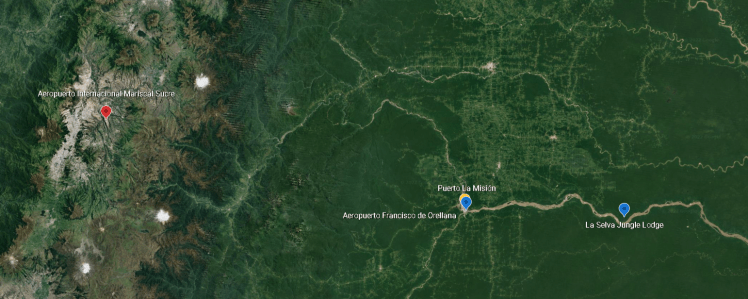
Link to Google Earth Project: https://earth.google.com/earth/d/1v6i3QkkSI4WmbZqMh9k1eJIMsnJ8RFDt?usp=sharing

In 2021 we set ourselves the goal of learning more about our country and it is so that in October 2021 we began to plan the end of the year trip, we decided to go to Yasunísince it is one of the most biodiverse places in the world and we wanted to show it and enjoy it in the first person,so we looked for a lodge which service was for small groups due to the current contingency and also adapted to the available vacation days.(if you want to know the review of the place we invite you to our trip advisor account LINK TO THE REVIEW IN TRIP ADVISOR)

It was thus that between the Christmas and New Year’s festivities we began the trip. From the city where we live now, Quito, we took a 30 minute flight to El Coca,where the guides took us to the transport that would take the group to the dock where we traveled on a boat for about two hours down the Coca River to the entrance of the lodge. After that, we took a small rowing boat to move along a stream that took us to the Garzacocha lagoon where the lodge is located. The view is spectacular, from there we began to enjoy the magnificence of the exuberant vegetation and the wild animals that welcomed us.
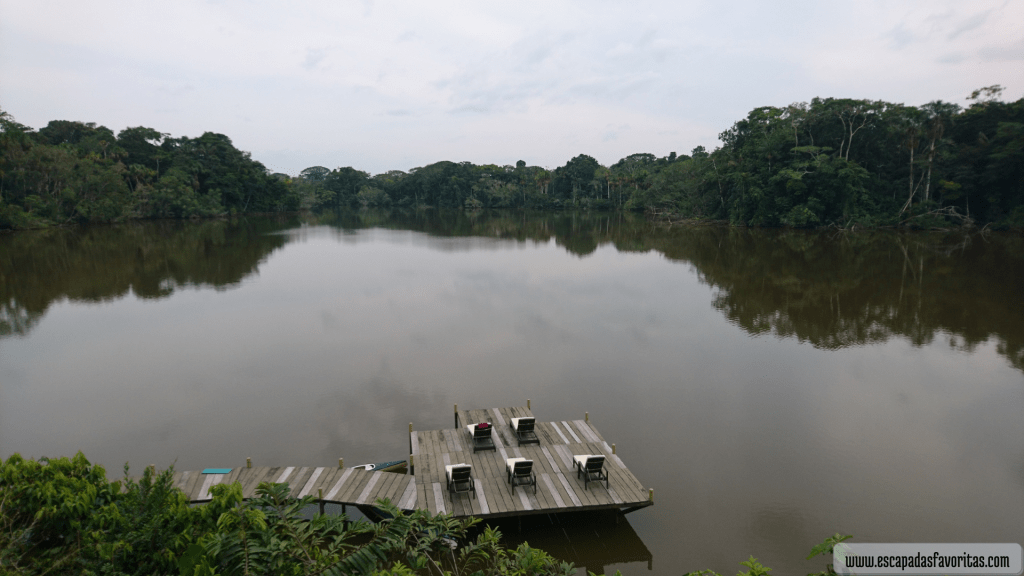
In the afternoon, together with our naturalist guide Luis and the local guide Henry, we explored the lagoon by rowing boat where we realized that a large paiche(Arapaima gigas)  was close, due to the turbulence of the water it is not easy to identify the fish but its movements do not go unnoticed; on the edges of the lagoon we saw some hoatzins or mountain turkeys (Opisthocomus hoazin) that rested on one of the species of coussapoa or “matapalo” existing in the place. A great experience was clearly seeing how squirrel monkeys (Saimiri Sciureus) and capuchin monkeys (Cebus Macrocephalus) fed, we actually loved it since they are numerous and thanks to being a small group it was possible to enjoy observing them.

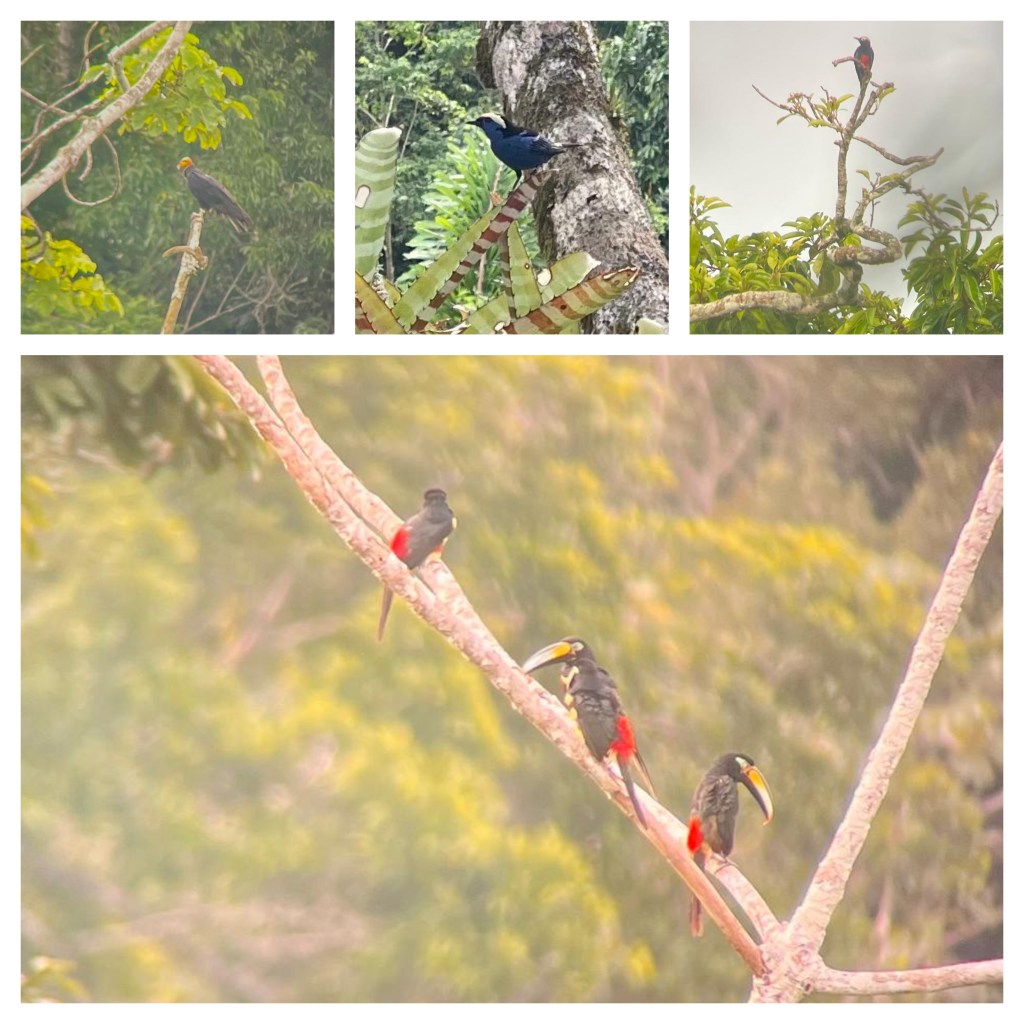
The next day very early in the morning at 6 AM,we went to the observation tower located 15 minutes from the lodge, we climbed 35 meters (115 feet), from there we can see the canopy or tops of the trees as well as the imposing ceibas (Ceiba pentandra). In the place we began to look for species, it did not take long for a group of red howler monkeys to appear before our eyes (Alouatta seniculus),there were about six to ten individuals and they rested a few meters from us,thanks to the telescope we were able to enjoy them throughout our stay there.The knowledge of the local and naturalist guide s allowed us to identify some species such as:curiquingue (Daptrius ater), bidentate hawk (Harpagus bidentatus), euphonia (Euphonia xanthogaster), dotted cotinga (Cotinga cayana), blue cotinga (Cotinga nattererii), banded arazari toucan (Pteroglossus pluricinctus) and greater yellow-headed vulture (Cathartes melambrotus).
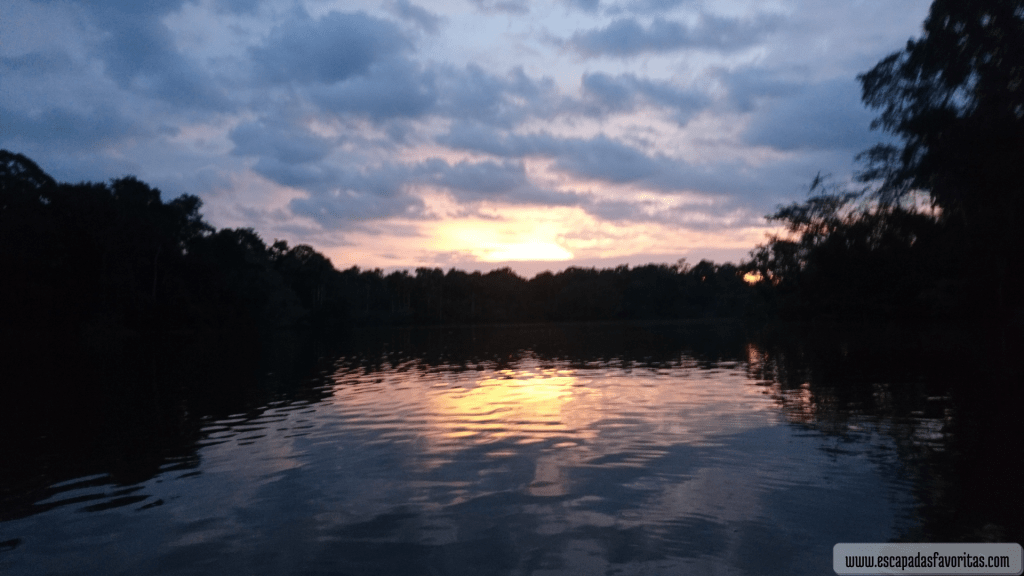
In the afternoon we hiked through the thick primary tropical rainforest to experience the sounds of nature. If you thought the place was silent, it really wasn’t. we realized that at every step the life of thousands of organisms and animals is noted. We finished the walk and took the rowboat to watch the sunset from the lagoon.
The next morning we left for the recently formed parrot salting to get to the place we take a motorized canoe after 20 minutes down the Coca river, , we were able to observe one of the most beautiful events of nature on one side of the river since thousands of birds such as parrots and parakeets (family of psittacines) approach every day to consume certain minerals that allow them to improve the digestion of fruits and seeds of the forest that are their main food this is a habit of the birds that for about two to three hours nibble, peck, scratch and drink mud and water, supplementing their diet as an antacid and exquisite natural digestive.

After this great show we go to the Kichua community where Sandra welcomes us in her language and explains certain important aspects of the  medicinal plants such as wild garlic (Mansoa alliacea), which is used to smoke houses and to make a “limpia”, a local ceremony performed by a wise man called Chaman. She also explains about the cultivation of cassava, a very important tuber for the community, it is a source of nutrients and they use it to make a typical drink called chicha;  the process of making the drink is also explained and they gave us to try some of their common foods where it stands out a beetle larva called “chontacuro” that the locals consume roasted, with the belief of its nutritional and medicinal properties.

Upon returning to the lodge we were able to experience kayaking in the lagoon on our own and later in the afternoon go explore this ecosystem a little more by doing recreational and ecological fishing.Thanks to the guides we were able to observe catfish and a piranha, then we left them back in the lagoon. At night, we observe some constellations and stars, actually a different experience to enjoy the sounds of the forest under a sky free of light pollution from big cities.Thus we finished the trip for the next day to take the return boat that would take about 3 hours and then the flight back to Quito.

At the end of the trip we are left with many experiences, photos and memories lived and we know. We must return because, as in any trip, there are always pending things to do and attractions to discover.We arrived home to say goodbye to the year 2021 and welcome 2022, an important year since it is the beginning of this project of ours.

Soon we will write about one of our trips already made to continue thanking you for the pleasure of sharing the taste for our «Favorite Getaways»

Si usted necesita la versión en español clic AQUI

Viaje a la Amazonía Ecuatoriana – Yasuní

If you need de english version go to this post: ENGLISH VERSION

La Amazonía Ecuatoriana es una de las zonas de mayor biodiversidad en el planeta, posee una vasta cantidad de especies animales y vegetales, es parte de la cuenca amazónica que genera entre el 16% al 20% del agua dulce del planeta y contiene el 25% de la biodiversidad terrestre.  El área aproximada de 120.000 km² que corresponden al 43% del territorio del país, comprende seis provincias (división territorial de Ecuador), limita con Perú y Colombia. Su geografía comprende desde pequeñas colinas en las estribaciones de los andes hasta la llanura que es la zona más extensa, el clima es  cálido-húmedo donde la temperatura varía entre 15 y 40 ℃ (59 y 104 ℉) y la humedad puede llegar hasta 80 al 100%. 

Por su gran extensión posee algunas reservas y parques nacionales en esta ocasión visitamos la Reserva de la Biósfera Yasuní localizada en la provincia del Napo (norte de la Amazonía), el ecosistema dominante es el Bosque Húmedo Tropical Lluvioso que es parte de la cuenca alta del Amazonas, siendo el 99.73% de su extensión representada por vegetación natural original o primaria.

Ir al mapa en Google Earth: AQUI

En 2021 nos planteamos como objetivo conocer más nuestro país y es así que en octubre 2021 comenzamos a planear el viaje de fin de año, decidimos ir al Yasuní puesto que es uno de los lugares más biodiversos del mundo y queríamos evidenciarlo y disfrutarlo en primera persona, así que buscamos un lodge cuyo servicio sea en grupos pequeños por la contingencia actual y además se adecúe a los días de vacaciones disponibles (si deseas conocer el review del lugar te invitamos a nuestra cuenta en trip advisor ENLACE AL REVIEW EN TRIP ADVISOR).

Fue así que entre las fiestas de Navidad y Fin de Año iniciamos el viaje. Desde la ciudad donde vivimos ahora Quito tomamos un vuelo de 30 minutos hacia El Coca, allí los guías nos recibieron para llevarnos hacia el transporte que llevaría al grupo al  muelle donde tomamos una lancha por dos horas por el río Coca hacia la entrada al lodge.  Después de ello tomamos una pequeña lancha a remo para trasladarnos por un riachuelo que nos llevó hacia la laguna Garzacocha donde se ubica el lodge, la vista es espectacular desde allí comenzamos a disfrutar de la imponencia de la exuberante vegetación y los animales silvestres que nos dieron la bienvenida.

En la tarde junto con nuestro guía naturalista Luis y el guía local Henry exploramos la laguna en lancha a remo donde pudimos darnos cuenta que un gran paiche (Arapaima gigas) estaba cerca, por la turbulencia del agua no es fácil identificarlo pero sus movimientos no pasan desapercibidos; en los bordes de la laguna vimos algunos hoacines o pavas de monte (Opisthocomus hoazin) que descansaban sobre una de las especies de coussapoa o matapalo existentes en el lugar. Una gran experiencia fue divisar claramente cómo se alimentaban monos ardilla (Saimiri Sciureus) y monos capuchinos (Cebus Macrocephalus), en realidad nos encantó puesto que son numerosos y gracias a ser un grupo reducido fue posible disfrutarlo. 

Al día siguiente muy temprano en la mañana 6 AM, salimos hacia la torre de observación ubicada a 15 minutos del lodge, subimos 35 metros (115 pies), desde allí divisamos del dosel o copas de los árboles además de la imponencia de las ceibas (Ceiba pentandra). En el lugar comenzamos a buscar especies no tardaron en aparecer ante nuestros ojos un grupo de monos aullador rojo (Alouatta seniculus), eran cerca de seis a diez individuos y descansaban a unos metros de nosotros, gracias al telescopio pudimos disfrutarlos durante toda nuestra estancia allí. La experiencia del guía local y naturalista nos permitió identificar algunas especies como: curiquingue (Daptrius ater), gavilán bidentado (Harpagus bidentatus), euphonia (Euphonia xanthogaster), cotinga punteada (Cotinga cayana), cotinga azul (Cotinga nattererii), tucan arazari de bandas (Pteroglossus pluricinctus) y gallinazo cabeciamarillo mayor (Cathartes melambrotus).

En la tarde hicimos una caminata por el espeso bosque húmedo tropical primario para experimentar los sonidos de la naturaleza, si pensábamos que el lugar era silencioso en verdad no fue así, nos dimos cuenta que a cada paso se nota la vida de miles de organismos y animales, terminamos la caminata y tomamos la lancha a remo para mirar el atardecer desde la laguna.

La mañana siguiente salimos con rumbo al saladero de loros recientemente formado, para llegar al lugar tomamos una canoa a motor después de 20 minutos por el río Coca pudimos observar a un lado del río uno de los eventos más hermosos de la naturaleza puesto que todos los días se acercan miles de aves como loros y pericos (familia de los psitácidos) para consumir ciertos minerales que les permiten mejorar la digestión de frutos y semillas del bosque que son su principal alimento, esto se constituye en un hábito de las aves que por alrededor de dos a tres horas mordisquean, picotean, arañan y beben lodo y agua, complementando su dieta a modo de antiácido y digestivo natural exquisito.

A continuación de este gran espectáculo nos dirigimos a la comunidad Kichua donde Sandra nos recibe en su idioma y nos explica ciertos aspectos importantes de las plantas medicinales como el ajo de monte (Mansoa alliacea) que es utilizado para ahumar las casas y para realizar limpias, ceremonia local realizada por un hombre sabio llamado Chaman. También explica sobre el cultivo de la yuca un tubérculo muy importante para la comunidad, es fuente de nutrientes y lo utilizan para realizar una bebida típica llamada chicha; se explica también el proceso de elaboración de la bebida y nos dieron a probar un poco de sus alimentos comunes donde resalta una larva de escarabajo llamada chontacuro mismo que los locales lo consumen asado, con la creencia de sus propiedades alimenticias y medicinales.

Al retorno al lodge pudimos experimentar por nuestra cuenta el kayak en la laguna para después en la tarde ir a explorar un poco más este ecosistema realizando pesca recreativa y ecológica.  Gracias a los guías pudimos observar al pez gato y una piraña, después los dejamos nuevamente en la laguna. Ya en la noche observamos algunas constelaciones y estrellas, en realidad una experiencia diferente disfrutar de los sonidos del bosque bajo un cielo libre de la contaminación lumínica de las grandes ciudades. Así terminamos el viaje para al día siguiente tomar la lancha de retorno que tomaría alrededor de 3 horas y después el vuelo de regreso a Quito.

Al terminar el viaje nos quedamos con muchas experiencias, fotos y recuerdos vividos y sabemos que debemos regresar porque como en todo viaje siempre quedan cosas pendientes por hacer y atractivos por conocer. Llegamos a casa para despedir el año 2021 y dar la bienvenida al 2022 un año importante puesto que es el inicio de este nuestro proyecto.

Pronto escribiremos sobre uno de nuestros viajes ya realizados para seguir agradeciendo por el placer de compartir el gusto por nuestras “Escapadas favoritas”

If you need de english version go to this post: ENGLISH VERSION